Similar to studio monitors, studio headphones are great for reproducing your recording with a clean and accurate sound.
You may be new to these types of headphones or just looking to graduate to a better pair. Either way, there are some primary factors you need to consider when choosing the right option for you.
If you’ve done a little research, you know how they work, but you might be asking yourself some more in-depth questions about your future cans like:
- What kind of headphones should I get for good sound isolation?
- Which ones are the most comfortable?
- What can you get out of high-end headphones that a budget pair can’t give you?
Since there are so many factors involved in making the right decision, we’ve laid down all the ones you need to consider before even looking into specific models.
We’ll run you through comfort, size, accuracy, and everything in between.
Before we go into these factors, let’s get a better idea of the relationship between headphones and speakers…
Studio Headphones vs Studio Speakers
In the music industry, you’ll find that the concept of mixing or mastering on headphones is widely frowned upon. We believe speakers and headphones can each play a role in the studio, but it will depend on the situation or circumstance.
So before you make any snap decisions, it’s a good idea to know the potential advantages and disadvantages of purchasing a pair of studio headphones over monitors.
Upsides
First of all, unlike heavy studio monitor speakers, headphones are always more portable. Even if you get yourself a pair of small 3-inch monitors, studio headphones are still more easily transported. Secondly, studio headphones allow you to connect to a wide range of different devices.
Diving deeper into the benefits of a good pair of headphones we should mention they can help you hear small details that would otherwise go unnoticed with speakers. This makes them great for identifying unwanted hissing in the background, bits of distortion, and many other flaws in your recording.
Unlike speakers, headphones don’t rely on the studio environment when it comes to sound. So you won’t have any added costs for treating your control room. For this reason, many engineers and producers use their headphones when mixing in different environments other than their treated rooms in the studio.
You won’t find it any more difficult to make decisions about compression or EQ with the right pair of headphones than with a set of speakers. In fact, you might even find yourself noticing the significant effects of over-compression (e.g. distortion) when listening with headphones.
Downsides
While the level of detail headphones offer can sometimes bring out things that speakers can’t, this characteristic can also make it more challenging to judge reverb levels. This is because you can hear so deep into your mix that even the slightest amount of reverb will still be relatively audible. This can result in you underestimating the actual amount of reverb you would need for a speaker mix.
Another downside is deciding how much bass sounds 'right' on headphones. This can be a constant issue because although you can hear the bass through your ears, you don’t get the physical thump and full-body experience you would from a pair of speakers.
When it comes to a wide stereo image, you’ll find that with headphones the stereo image sounds evidently wider than it would with studio monitors. This is typically because monitors sit right in front of you, whereas headphones are wrapped around your ears.
There is also the added issue of center-panned instruments. With studio monitors you’ll get the feeling that they’re right in front of you, while with headphones they will sound like they’re right between your ears. These two issues present a noticeable challenge if you choose to work on a mix using studio monitor headphones.
Bottom Line…
If you do choose to use headphones over speakers, it will not only be more cost-efficient but also provide a more private work environment (if you don’t want to make a lot of noise).
You should keep in mind that not all headphones are built equally, and not all studio-designed headphones will give you an accurate reproduction of your recording or mix. No worries… We’ll guide you through what you need to look for in your new headphones to get that accuracy you’re looking for.
If you’re looking to simulate the same listening experience as speakers (but with headphones), read on to the end for our tips.
Over-Ear, On-Ear, or In-Ear: The Comfort Factor
The terms ‘circumaural’ and ‘supra-aural’ refer to the design of the headphones’ ear cups (cushioning between the speakers and your ear). There are two main designs, which are “around the ear” (circumaural) and “on the ear” (supra-aural). However, you’re not going to find many professional-quality supra-aural headphones.

Image Source: concertoaudio.com
Over-Ear Studio Headphones
Circumaural designs, which are typically referred to as over-ear headphones, are designed to be placed around the ear. Over-ear headphones are a popular choice for engineers because they offer a comfortable fit, and some have advanced features like sound isolation.
While these are the least portable for people who mix on-the-go, you can still take them on the road very easily. You’ll find that most big studios have large over-ear headphones since they do a great job of isolating sound and allowing you to hear exactly what you need to hear. Of course, it goes without saying that every model is different and the level of sound isolation will differ from brand to brand.
In terms of comfort, these can be among the most comfortable headphones you can get or the most uncomfortable. It all depends on the design. When choosing over-ear headphones, you should make sure the headband is padded, and the weight is distributed comfortably over the top of your head. The material of your ear cups should also be a comfort factor when choosing these types of headphones. We’ll discuss different types of materials later on…
On-Ear Studio Headphones
On-ear headphones, otherwise known as the supra-aural design, are headphones that sit just on the ear. These can be another popular choice because manufacturers normally use lightweight materials.
On-ear headphones can also be a smaller alternative to bulky over-ear headphones. Unlike the over-ear options, on-ear models offer a more spacious, natural sound, as they allow in more air rather than being completely closed off.
Regarding portability, these are definitely more portable than a big set of over-ears. Most of these types are designed to fold up and become more compact for travel with on-the-go users. While they certainly aren’t as portable as a small pair of in-ears, you’ll find their supplementary strengths give them an edge over their competitors.
Comfort is where on-ear models shine. You can wear these kinds of headphones for extended periods of time because they aren’t wrapped around the ear, avoiding sweating and discomfort. Since these are the lighter-weight alternative to over-ears, they will also have a more comfortable headband resting on the top of your head.
In-Ear Studio Headphones
In-ears are typically the most common headphones used by consumers, whether they’re a pair of Skull Candy buds or your iPhone headphones.
Unlike the previous types, in-ears are incredibly portable. Since the drivers and enclosures are pretty small, these models can easily be slipped into your bag or even your pocket.
You’ll find that most good quality in-ear headphones block all unwanted noises and sound without any fancy advanced features like noise-cancellation; they’re simply popped into the ear, and all noise fades.
However, keep in mind that not all in-ears go directly into the canal but actually just sit inside your ear. These types don’t do a great job of sound isolation. Make sure you keep that in mind if you decide to choose an in-ear model.
Unlike on-ear and over-ear headphones, in-ear models are commonly considered to be the most uncomfortable of the options. This is because some people have sensitive ears, so anything inserted into the ear or ear canal may cause discomfort. Also, when worn for long periods of time it can start to feel irritating.
Closed-Back vs Open-Back
You may have heard about open-back or closed-back headphones. But does the difference really matter?
The simple answer is yes!
There are several significant differences between these specific models that you should know about. Ultimately, your decision is going to be based on your preferred choice when it comes to your listening environment.
Open-Back Headphones

Image Source: sennheiser.com
On open-back headphones, the grills allow both sound and air to flow in and out of the cups. This ultimately creates a more expansive, open sound.
The positive side of this design is it transforms your listening experience substantially. The experience is different than that of a set of closed-back headphones, which typically give you an “in your head” experience. We’ll go more into that later on.
With open-back headphones, you get the “around me” listening experience as you hear your recording. All the ambient noises around you leak into the headphones. Noises from the cars, wind, and people on the streets all travel into your ear through the headphones as if you didn’t even have them on.
So why is this a good thing?
For those who grew up on closed-back or in-ear headphones and are familiar with the sound isolating experience, the idea of sound seeping into the headphones might be pretty unappealing.
But open-back headphones have their own perks. Instead of feeling like you’re in the studio booth, open–back headphones give you the sense of the musicians performing right in front of you, giving you that feeling of increased space. This feeling of increased space and openness not only helps you identify and locate certain instruments within your recording but also allows for a more natural and accurate sound.
A good pair of open-back headphones can be a great studio companion when it comes to mixing and mastering your recordings.
Closed-Back Headphones

Image source: beyerdynamic.com
This design is typically the complete opposite with closed-back headphones. Compared to open-back options, which allow you to hear your surroundings, the closed-back varieties isolate you from all external sounds, so you only hear what’s coming out of your cans. Also known as ‘sealed’ headphones, they provide little leakage of sound and help with concentration.
Don’t mistake closed-back headphones for noise canceling headphones, as they won’t block out ALL the outside noise, but they do take care of most of the unwanted sounds around you.
You’ll find that most artists, DJ’s, and producers use these types of headphones. Like most closed-back headphones, they tend to sound like they have more bass, which is typically due to the sound being isolated straight into your ear.
When you’re mixing, one of the main factors with a good pair of closed-back headphones is that they can offer maximum sound isolation. This is so you can monitor the headphones’ mix without the sound flowing into the live mic and spoiling your entire take.
There are some downsides when it comes to choosing closed-back headphones. When sound isolation increases, you will often find that sound quality decreases. This is okay for tracking since your priority, in that case, is sound isolation.
However, there are some situations where sound isolation isn’t always the first priority. When you record instruments like keyboards or electronic drums (which don’t require a mic) or when you are mixing, you’ll find that sound quality does in fact take priority over sound isolation.
Honorable Mention
There is a third alternative. While some speculate it is a marketing ploy, many believe semi-open headphones give you the best of both worlds. These options are a compromise between open and closed headphones, offering a more spacious sound while not letting too much noise in or out.
Material: Leather, Vinyl, or Cloth
Does the material really matter that much?
The short answer is yes! When it comes to headphones, in our opinion, the material is one of the primary factors.
Most headphones tend to be padded and covered with leather, vinyl, or cloth. Like most things, there is a compromise between different materials for headphones.
If you often find yourself getting sweaty after an extended period of usage, leather or vinyl are the ideal choices as they will last longer and are easily cleaned with wet wipes or washcloths.
But if you’re prone to getting really sweaty in your headphones, you’ll find pulling them off is like sticking to leather armchairs in the summer. The alternative can be cloth, which doesn’t have that sticky feeling but instead is likely to get wet and stinky over time. Keep in mind that if you choose cloth padded models, the company should offer replacement parts.
Cables and cords are another factor you should consider. There are all types of models that come in different lengths and sizes. Thin and delicate cables are more prone to getting damaged quicker and will need to be replaced after a while. You should find a pair of headphones with thicker cables, which are less likely to get tangled and are also more resistant to bending and heavy usage.
Frequency Response: Accuracy is Key
If you’re planning on checking your mixes with studio monitor headphones, one of the main factors in your decision is going to be the frequency response.
Since studio quality headphones are made to let you hear everything within your mix, this means they should have a high level of accuracy. There are a lot of headphones on the market that provide a more colored sound. While this is nice for general-listening, anyone looking to mix or master will find that it clouds your judgement. This colored sound is commonly referred to as “sweetening,” which is the equalizing of the headphones to give an appealing overall sound to the music.
If you’re doing any kind of critical listening like mixing or monitoring, you will want to avoid any sort of sweetening and focus on a flat frequency response to help you judge your mix accurately and precisely.
Since everyone has a different opinion on what is accurate, the best advice we can give when choosing a pair with a proper frequency response is test out different pairs while listening to music you know. The more you know the music, the better.
What you’re ultimately looking for is not what sounds nice. If it sounds nice or appealing, then that’s usually an indicator that the headphones aren’t very accurate. Instead, you should be looking for a pair that points out things you may have never noticed before. If you can’t hear details you are normally used to hearing, or they don’t pick up something you’ve never detected, it’s likely that pair is not accurate.
Wireless vs Wired?
In this day and age, the audio equipment industry has shifted to a lot of wireless options; studio headphones are no stranger to this transition.
Most wireless models typically use Bluetooth, and their range is usually over 20 feet. You’ll find that a lot of wireless headphones have a wire which connects the two cups or buds. However, some companies have gone the extra mile and developed “true wireless,” which have no wires connecting the buds and cups.
While wireless headphones are becoming a popular choice on the market, within the studios the wire still rules.
So why is that?
Firstly, most professional audio equipment has been constructed around wired headphones for years, which isn’t about to change anytime soon.
Secondly, when you’re in the middle of recording or mixing something, you’re always going to be next to your gear, so you’re not likely to get up and go to another room.
The third reason is that Bluetooth or wireless headphones always compress signal in some sort of way prior to transmission between devices. While this can be efficient, it is still compression.
Last, but certainly not least, wireless headphones are not able to amplify sound as much as wired models.
Our advice? Stick to the old-school wired gear; you have nothing to gain (and a lot to lose) if you try to go wireless with your sound.
Connectivity – Do I Need to Consider the Plug?
Yes. Most of the average headphones on the market are designed to plug into phones, iPods, iPads, and laptops. This means they have the usual 1/8-inch mini-plug connection. As mentioned before, this is alright if you’re using them for general listening.
If you’re planning to mix and use additional audio gear like audio interfaces, you certainly will need a ¼-inch plug. There are a variety of studio headphones on the market with a ¼-inch plug that is compatible with other audio gear.
While you can consider getting a ¼-inch adapter for your headphones, 1/8-inch plugs are more versatile and durable, which definitely makes them the better choice.
Usability and Replacement: The Wears, Tears, and Spares
If you’re going be doing a lot of mixing with your headphones, durability is something you’re going to want to keep in mind. Just like everything used on a daily basis, headphones are prone to the inevitable wear and tear.
The unfortunate fact is that the durability of your headphones often depends on their weight. Lighter headphones are typically made out of flimsy materials that can be snapped in half more easily.
There are several things to look for in headphones when you’re debating their durability and lifespan. Make sure the hinges are sturdy, the cables are thick and resilient, and the headband is made of robust material.
Many top-notch brands have designed their headphones to be easily replaceable with removable cables as well as replaceable ear pads and headbands. Some brands like Sennheiser have gone the extra mile by making almost all the parts replaceable, so your favorite daily mixing headphones won’t need an upgrade for a while.
A Headphone Amplifier: Is It Necessary?
Some people think it’s necessary to buy a headphone amp, but it all comes down to what you’re doing and your audio gear.
If you’re working alone in your home studio, you’re likely not going to need one. You’ll find that your monitor controller or audio interface will have a decent built-in headphone amp.
But for those of you who want a little more juice here’s a list of the three main types:
- Portable – A slim, plug-in-play sized amp that can power a pair of headphones.
- Desktop – A larger option designed to sit on your desk that can drive one or two sets of headphones with four outputs, and can even have a set for your studio monitors.
- Rackmount – These amps are normally placed on your wide rack with the rest of your signal processing gear. They typically have between four to six headphone inputs and are commonly ‘daisy-chained’ to each other to double or even triple the number of outputs.
Most home studios opt for the desktop amps for convenience and the extra power. It allows engineers to link up several headphones for cross-referencing, making sure the mix is perfectly balanced at varied volumes.
Genre: Do I Need Something Specific for My Type of Music?
While there are plenty of different studio headphones offering bass boosters or some form of sweetening, you will ultimately be looking for one universal thing regardless of the nature of your recording, which is accuracy.
This means there is no specific one headphone that will work with a particular genre or type of music. However, cross-referencing is an essential part of the mixing process, so listening on multiple pairs of headphones is the ideal solution.
Professional mixing and mastering studios typically have multiple pairs of (different) headphones they use to cross-reference.
If you can only afford one pair, get the most accurate ones you can within your budget. Although, it would be nice to have more than one pair, budget is also an important determining factor, which we will discuss below.
Budget: Get the Best Your Money Can Buy
By now, you have probably decided on some of the features you want in your next pair of studio headphones. Ultimately, everything you have deemed essential for your new cans needs to also match your budget.
If you want steak but can only afford a burger, buy a great burger, not a cheap steak.
The budget can be a discouraging topic, especially with all the big price tags ranging between three to four figures. Our advice would be to compare the value of your desired headphones with the price. While price is just a figure on the tag, the value is:
- durability - how long they’re going to last
- quality - sound and frequency response
- replacement costs - are there spares available to replace broken parts?
It goes without saying that if you buy a cheap pair because of your budget, you’ll find yourself having to replace it a lot sooner than if you purchase the best in your budget range.
High-End Studio Headphones
If you’ve managed to save up a decent amount, it’s a no-brainer that you should consider investing in the crème de la crème of studio headphones. Ultimately, the higher the price, the better the specs, including comfort, sound quality, and response. All the things you have your heart set on in this regard will likely be found in a pair of high-end headphones.
With so many benefits and features found in these types of headphones, you’ll find that choosing not to save a hundred bucks will definitely be worthwhile.
High-end headphones typically feature:
- Strong design and build (no flimsy material that can break or snap easily)
- Little to no distortion at all volume levels (crank it up, and it will still sound good)
- The closest thing to a flat and accurate frequency response (no sweetening)
- Superior comfort (you can wear them for hours on end)
- Replaceable pieces (spare parts like cables and ear cups are easily replaced)
- Impeccable sound isolation in closed-back models
- Fuller bass response
Here’s some high-end headphones we recommend...

The AR-H1 open-back headphones are some seriously classy cans with a modern metallic grille design. Though their bigger than most studio headphones you might be used to, they’re actually very comfortable when worn for long periods of time.
The large earcups each hold an 86mm planar driver that provides a full sound and a flat frequency response through even vibration. This means that the accuracy in sound is top-notch and by far beats most other headphones out there regarding true sound.
Even with the flat frequency response, you can get a surprising amount of rumble that is typical in modern electronic music, though it isn’t overpowering by any means. The cable that runs off of each of the earcups is very thick and durable, meaning you won’t have to deal with kinks or tears, and also comes with a ¼ inch adapter for the 3.5mm plug.
Bottom Line: Whether you are mixing or looking for a way to enjoy the most accurate music experience you have ever heard through a pair of headphones, these open-back Acoustic Research AR-H1s are the way to go.

Whether you’re mixing, mastering, or recording, these are some top-of-the-line circumaural headphones that provide high-fidelity sound and a gorgeous sense of space around you. These DT 1990 Pro headphones have a large, open-back design with soft velour earpads that makes them fit snugly and comfortably, which is essential for more extended sessions.
You can even switch the neutral earpads out for the included “bass response” earpads. There are also two thick cables included, one at 9.8’ and one at 16’, great for tracking and mixing.
The audio performance of these bad boys is outstanding. The depth in the bass frequencies is full-bodied, and there is a beautiful amount of detail in clarity in the mids and highs. This is all thanks to the 45mm Tesla drivers. These are intended solely for studio use, so just note that they don't’ come with an inline remote or mic on the cable like some modern headphones.
Bottom Line: Whatever kind of engineer or producer you are, the Beyerdynamic DT 1990 Headphones are an excellent all-around pair of high-end headphones that give you true frequency response, though can also represent low frequencies better than most studio cans.
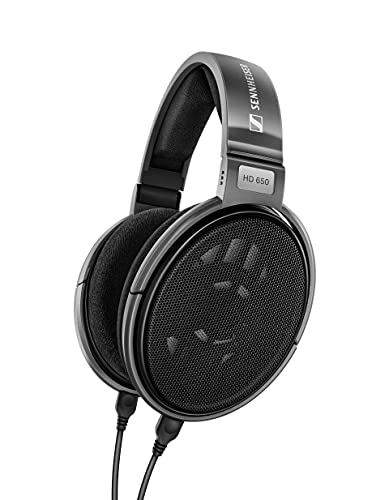
Sennheiser is easily one of the most popular manufacturers of studio headphones, and for a good reason. If you like Sennheiser, but also like the idea of having open-back headphones, the HD 650s are the way to go. The aluminum voice coils create a wide frequency response (from 10Hz to 41kHz) from the HD 650s that is wide and natural.
They provide an excellent amount of space from your surrounding environment as well. These headphones just feel high-end thanks to the shiny titanium finish. Nothing like great construction!
The beauty of these headphones is the amount of headroom that comes with the high fidelity sound. Let it be noted though that you will need a good headphone amp to truly get the most out of these bad boys. Out of all the high-end headphones on our list, these are the lightest, meaning you won’t have to sacrifice your neck for a good mixing session.
Bottom Line: Whether you’re an audiophile looking to get a natural sound or a producer / engineer in the market for open and dynamic hi-fi stereo headphones, the Sennheiser HD 650s are a top-of-the-line choice.
Mid-Range Studio Headphones
For audio enthusiasts with a smaller budget looking to add a decent pair of studio headphones to their home studios, we highly recommend mid-range headphones. While they don’t match up to the big boys, they still provide a good amount of comfort and value. Mid-range headphones typically feature the following:
- A decent amount of comfort (comfortable to work with for a few hours, but can tend to feel uncomfortable and sweaty after a while)
- Slight distortion at higher volumes (you can always consider buying a headphone amp)
- Plenty of sound isolation
- A little more natural and accurate sound (higher frequency response than the lower end)
- Decent quality material (may begin to develop wear and tear with very heavy use)
Here’s some mid-range headphones we recommend…
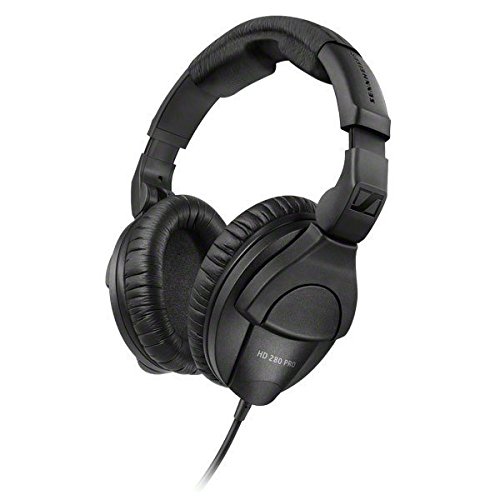
These pro studio headphones have been around for almost two decades now and are still some of the most purchased studio headphones out there. This is because they are a no-frills pair of headphones that are comfortable to wear and give you incredibly accurate sound that is perfect for mixing or recording music. All that comes at an insanely low price.
Like their older cousin, the HD 650s, these have a nice, comfortable, and secure fit and block out around 30dB of room noise. Unfortunately, they don’t come with a detachable cable, though the fact that the cable is coiled makes it great for all studio applications.
As for the sound, these are best for accuracy in the studio, not for hyped listening. You get a solid, flat-frequency response that is pretty light in the bass region, though you can get an excellent low-end punch if your source is powerful enough to drive them.
That being said, they still have plenty of headroom and won’t distort unless macerated with sub bass. If you’re looking for clarity and accuracy in a pair of closed-back headphones and you don’t need something that doubles as casual listening device, then these may be right up your alley.
Bottom Line: For the perfect mixture of quality and affordability, whether you’re mixing or mastering, the Sennheiser Hd 280 Pros are easily some of the most classic studio headphones on the market.
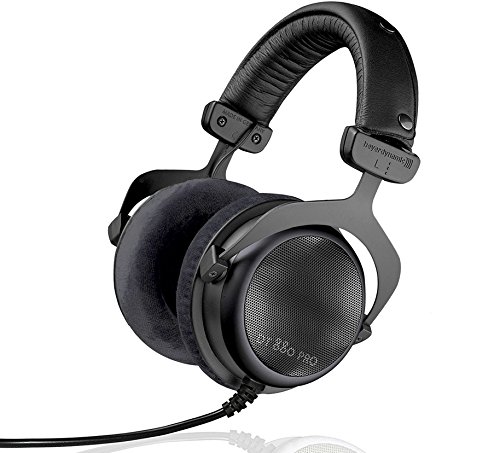
For a pair of mid-range headphones that you can either use to enjoy music at home or mix and master with, the Beyerdynamic DT 880 Pros are very versatile. They come with the same comfortable velour earpads as the 1990 Pros and offer tons of comfort for long sessions. The metallic grilles give these a luxurious look as well. The dynamic drivers give you a solid frequency range of 5Hz to 35kHz.
When you pair that with the semi-open design, you get an incredible sense of space and range for half the price of full open-back headphones. Note though, as you will need to use these with a reliable audio source to get the best in bass response and volume, and there is no inline remote or mic, as they are truly for studio applications.
These headphones deliver a surprising amount of accuracy, even in the lower sub bass regions. Even with the powerful lows that we’re used to with Beyerdynamic cans, they are still able to give you crisp, even highs and mids as well. While maybe not as “flat” of a frequency response as the HD 280 Pros, they provide a far better sense of space thanks to the open design.
Bottom Line: Whether you are mixing, mastering, or enjoying music at home with a powerful stereo system, these headphones can deliver power and accuracy.

Even though Shure is mostly known for their wide array of microphones, they produce a solid line of studio headphones as well. The SRH840s seem to be their most popular pair for professional studio use.
In all, they are best for monitoring more than mixing or mastering, as the bass is made to be deep and the treble is made to be clear. This gives you balance and clarity that is perfect for tracking, though maybe not the best for accuracy.
One of the unique things about the design of these headphones is that they are made with memory foam earpads that you can easily replace. We’re not sure why more headphone manufacturers don’t do this, as they are extremely comfortable.
Bottom Line: If you’re working in a studio environment and need a pair of headphones that are built for monitoring, the Shure SRH840s are unique in being some of the best mid-range headphones for that specific purpose.
Low-End Studio Headphones
If you’re still starting out and not looking to splurge too much on new equipment, you could look into the two-digit budget range. While you won’t get the same quality out of a pair of low-end headphones that you would out of a mid-range or high-end pair, it doesn’t mean these models won’t do the job.
As mentioned before, it’s important to link your price to your value, so basically you get what you pay for. From low-end headphones, you can expect:
- Audible distortion at high volume levels
- Comfortable wear to a certain point (you’ll find that they become uncomfortable and sweaty after a long period of use)
- Low bass response (low-end frequencies don’t sound as good)
- Less durability (are extremely prone to wear and tear and breaking)
- Some models are colored or sweetened (less flat and accurate)
Here’s some low-end headphones we recommend…
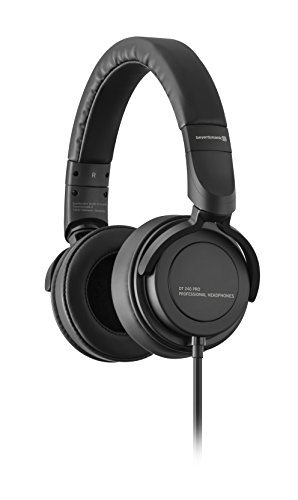
Typically, you’ll find that a solid pair of recording studio headphones can be a bit pricey. Luckily, Beyerdynamic created the budget-friendly DT 240 Pro Headphones, which are perfect for studio monitoring.
Not only do they have tons of accuracy, but they are also much lighter than most studio cans, making them easy to travel with if need be. Even though the earcups are made of plastic, they do a pretty solid job at keeping sound in, making them excellent for tracking.
Both of the earpads and the headband have a faux leather material so that you can wear them for hours without feeling discomfort.
As for the sound, there is a pretty accurate bass response that doesn’t overpower the highs. The surprising thing is the drivers don’t distort, even when playing the sound back at very high levels. It’s pretty remarkable for a pair of headphones that are so cheap.
That being said, if you are seeking a heavily boosted bass response, these aren’t the phones for you. These phones are all about the detail and the comfort.
Bottom Line: The Beyerdynamic DT 240 Pros are accurate and deliver very crisp audio for a budget pair of headphones.

Along with Sennheisers, these are probably some of the most popular headphones in studios around the world. Many people swear by Sony headphones, as they’re not very expensive, yet can produce an excellent sound for studio monitoring.
The drivers in these things aren't anything special at 40mm, though the impedance on these little guys is higher than a lot of headphones above their range. The closed-ear design provides tons of padding and blockage of ambient noise coming in and out, making them great for tracking. The highs on these headphones are easily the crispiest, though they do also produce decent mids and lows - enough to get the job done.
We love that Sony provided a soft case for travel. Many producers these days are constantly jet-setting around the globe, so having some way to travel with your headphones safely is very important.
Lastly, they have a nice retro look to them with the blue stripe on the side, the exposed wires, and gold Sony lettering, that gives you that sleek, vintage feel that can be inspiring when making music.
Bottom Line: These are great lightweight reference headphones for the studio that are comfortable to wear, easy to travel with and perform well for their price.

Status Audio is a brand that only entered the professional studio headphone game a few years back. In a short time, they have become a favorite for budget producers. It’s all because they deliver some serious quality with the name brand price.
They have a good response curve from 15Hz to 30kHz and push out a solid amount of bass from their 50mm drivers. Essentially, they are pretty standard headphones.
The construction on them is pretty lightweight, making them easy to travel with, the headband and earcups are relatively comfortable to wear for an extended period, and they even come with two detachable cables (one coiled and one straight) depending on what application you’re using them for.
Bottom Line: If you’re serious about budgeting and you don’t care too much about brand recognition, these CB-1s are serious contenders for the realm of pro recording studio headphones.
Things to Keep in Mind When Mixing with Studio Headphones
Now that you’ve decided on your perfect pair within your budget range, there are a few things you might want to consider when recording or mixing with studio headphones...
Recording Multiple Musicians or Instruments at the Same Time?
If you’re recording more than one musician at the same time, then you’re likely going to need a headphone distribution amp as well as more than one pair of headphones.
There are amps that can connect to your interface with outputs for up to four pairs of headphones. The amp gives you independent level controls for each layer in the recording. If you have more than four musicians/instruments, you can even daisy-chain multiple amps to get more headphone outputs.
Consider Crossfeed Plug-ins
If you want to try and simulate the listening experience of speakers or studio monitors on your headphones, you can always opt for crossfeed plug-ins.
These plug-ins basically mix a little of the right-hand channels into the left and the other way around. This means they position the sound of your recordings the way they would if you were listening on a pair of speakers. One example is Wavelab’s Externalizer, which gives you a single fader that gradually moves the virtual speakers both apart and forward.
If you’re working on a Mac or PC, Vellocet has developed a simple plug-in called VNOPhones that runs two slides: one handling the amount of crossover and another that matches the time delay to the width of your head.
One of the most effective plug-ins available is Ohl’s Crossfeed EQ. and it also comes with a file that guides you through all the different controls: how they work and how to adjust them to reposition panned sounds. This plug-in is useful for listening to existing recordings on the headphones and for listening while you’re mixing so you can see how your mix is going to sound spatially through speakers (or studio monitors).
Keep in mind that you should work on your recordings and mixes without a crossfeed so that they also sound good to those who will hear them with headphones.
Listen Up!
Though it’s difficult to choose a favorite pair of headphones, as there are so many different kinds for different applications, we would have to go with the Beyerdynamic DT 880 Pro.
They look great, they’re very comfortable, they provide a ton of space thanks to the open back design, and they are just all-around very versatile studio headphones for pro use at a mid-range price.
That being said, it’s always important to get a good idea of what your specific needs are before making your purchase, as some headphones are better suited for particular things more than others.
If you can, it’s always good to look for recording studio headphones with replaceable parts as well, as things happen, pieces break, and you don’t want to have to buy a new set if something like a cord breaks.
Also, we would recommend against leaning towards the hype of massively marketed headphones like Beats by Dre for studio use, as the accentuated lows that appeal to a consumer market are not great for professional use.
We hope that our article has helped you find the best pair of headphones for you. Have fun!
Leave a Reply