Adding a studio subwoofer to your set up is a pretty awesome way to upgrade your music production.
You’d be hard-pressed to get an entirely accurate insight into your studio mix without a studio sub.
But buying a quality sub can seem like pretty tricky business at first. There are so many different types on offer, with various features - it can be a little daunting.
With a little knowledge of subwoofers themselves, and what kind of features to look out for – picking up a quality product should be easy peezy.
Let's take a look...
Do I Need a Subwoofer with Studio Monitors?
One thing you might be wondering is whether a home studio subwoofer is even necessary if you have studio monitors. A quality pair of monitors are essential to have in your studio, but it misses a few critical areas to cover.
Adding a subwoofer takes care of a pretty important job – playing back those sweet low frequencies with clarity and precision.
Not only this but having a subwoofer takes a massive load off your actual studio monitors - since there’s no pressure on them to play back those subs anymore!
So your monitors can focus on playing you what they’re best at - that mid to high range, with total clarity.
In short, you’ll have a total music production powerhouse running, with each part perfectly made and tailored to fit its role.
It’s also worth mentioning, most studio monitors are not exactly built to represent that part of the frequency spectrum very well, and you’ll understand why shortly.
Also, sometimes, the situation calls for more bass. If you use your monitors not only for mixing and mastering but for merely enjoying music as well – this is definitely going to give that an upgrade!
All About That Bass
So, how exactly do subwoofers work?
Generally, subwoofers send out frequencies between 20hZ and 250hZ. The kind you feel rather than hear!
Essentially, subs work by pressuring the surrounding space.
They expand and contract by moving their drivers, changing the air pressure in your studio. That’s the sweet rumbling you can feel.
So, larger drivers create more air pressure than smaller ones (this is exactly why a dedicated sub is so important – the drivers in studio monitors are just too small to recreate these frequencies).
Something to think about when buying subwoofers are the two main types you’ll come across, that both feature a vast difference: active and passive subs.
Active vs Passive
Active studio subs are very popular these days, but that wasn’t always the case. Passive studio subwoofers were the standard in music production once upon a time, and are modular in nature.
This means, for a passive sub you’ll need to connect it to an external amplifier. If you already have passive studio monitors – you’ll have an amp. If that amp has a dedicated sub output, you’ll be able to hook up some passive subwoofers to the amp.
For active subs, there’s no need to connect up to any other gear, since their amp is built right in. This is one of the reasons that active studio subwoofers are so popular – the convenience adds to its charm.
Which is superior?
Well, that comes down to your personal opinion and what sound you prefer. There are no right or wrong answers here. Some purists will say that passive is the way to go, whereas some folks swear by active subs.
There are a few other things you might want to factor in when choosing a good studio subwoofer:
- Power
- Frequency Response
- Driver Size
- Weight
...and of course – your budget!
Our 5 Favorite Studio Subwoofers
So, here are the best studio subwoofers to sub up your studio set up, just right...

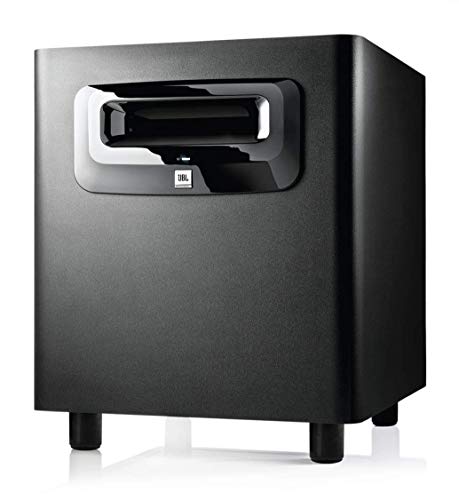
JBL is a big name in the audio game (around 70 years!), and have always offered high-end quality gear at a mid-range price. If you’re looking for some subs that are going to deliver – and deliver powerfully, then this could be the pick for you.
This model is particularly powerful – coming in at 200 Watts. For a sub this powerful, it’s still not too heavy, which is impressive. So it won’t an inconvenience if you need to move it around!
The JBL’s are an active sub, packed with some cool features.
There’s an XLF setting (stands for ‘Extended Low Frequency’) that recreates a similar sound experience to dance clubs. This means deeper and richer bass response.
These also come with JBL’s patented ‘Slip Stream’ low-frequency port.
In short, this bad boy competes with some of the best top quality subwoofers and is offered for a fraction of their price. It’s a total no-brainer here!
Bottom Line: The level of power offered by the JBL’s, as well as the renowned quality of JBL gear in combination with the reasonable price, makes this one stand out. The XLF feature is a cool option to deepen the bass experience, but it might not be as useful to those using subs exclusively for music production and looking for a flat response.
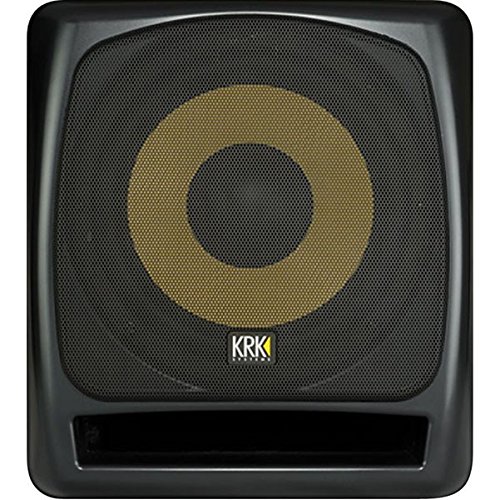
These subs feature the distinct style of KRK – grey cabinet and yellow Kevlar driver, covered with a removable mesh grille. Their quality is solid. Even just at a glance, they look built to last.
The only thing about having a subwoofer packing such a large driver is the weight – these are the heaviest active subs of the list.
Mobility could be an issue with these, but if you’re running a solid studio with no need for transportation, then these are the golden subs.
Running your mixes through these are going to be smooth as butter as they have an excellent response across their range. You’ll have a seriously augmented insight into the low-end of every mix.
Bottom Line: The weight of these subs could be an issue if you need to move around. The quality is a massive factor though, so it’s all about what’s more important to you.

The Presonus is capable of delivering the highest power out of all the options on this list, it’s almost comparative to a professional PA system – this sub is a real beast.
What’s impressive about this sub is the level of user control it offers. There’s a lowpass filter for any crossover with your monitors, a highpass filter to bypass below 80hZ on your monitors, and even polarity control.
If you love switching between mixes to make comparisons and test out the sound – this is an excellent pick. There’s a foot-switch to bypass not only the sub but the sub out and highpass filter.
There’s also some cool protective features built into this sub, and for such a powerful unit, this seems practical. There’s a subsonic filter, over-temp control as well as loads of other useful features built-in to protect your sub and keep it performing at its best.
The design looks pretty sleek too, so it’s going to look the part in your studio.
Bottom Line: The Presonus is a great piece to add to your studio for enhanced bass processing. There’s a lot of cool features packed in, and at that price, it’s pretty impressive.
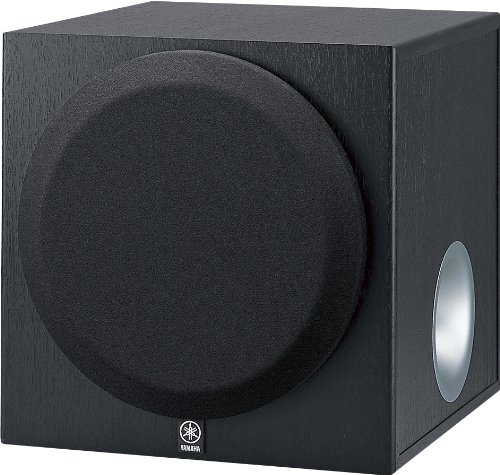
For such a small sub, this boasts an unusually deep bass range for a woofer of its size.
For an 8inch driver, being able to hear frequencies as low as 28hZ is pretty uncommon.
If you’re running a studio on a tight budget – this is going to be, arguably the best pick for you – regarding specs, at the very least.
If you need your gear to be as easy to move around as possible, this is going to be a great pick, as it’s the lightest out of the bunch. It’s also pretty compact, so if your studio is starting to get short on space, these won’t be taking up too much room.
Bottom Line: The Yamaha offers excellent performance for a sub of its size. This could be great for you if you’re running a small studio on a tight budget.

A Big reason for having a subwoofer is to make sure that you’re not overcompensating the low end in your mixes (this is a very easy mistake to make, mainly if you’re mixing on a small pair of studio monitors!)
KRK is known for producing quality gear for accurate low-end monitoring. These active subs are going to give a much clearer insight into what’s going on in the lower end of your tracks.
There’s a number of controls at the rear of the sub, including a low pass filter, volume control, and a bypass switch.
The design of these is pretty slick and characteristically KRK, but it also seems sturdy and a solid build that will last, with a nice grille that is both aesthetically pleasing and protective of the unit.
Although this sub doesn’t reach the deepest bass levels in comparison to others, many users report that these subs have a clear, crisp sound – which is pretty relevant for close bass monitoring in a mixing/mastering context.
Bottom Line: These subs have some cool controls at the back to tweak, including an RCA in and out, and XLR in and out, but it does seem like a bit of an odd design choice to have ¼” inputs, yet no ¼” outputs.
The Bottom Line
Out of all the subs mentioned, we feel the JBL LSR310S is an excellent medium between well designed, quality studio subs and price. We’d certainly feel confident recommending this as a viable option.
That said, every sub featured in this article has their own unique set of features they bring to the table. Whether it be a super low price, protective features, loads of power – it’s about figuring out which features matter most to you.
A good studio sub will deliver you those low frequencies, pure and unadulterated – just how they should be. But there’s a lot of other features you should expect from your subs to get the most out of them.
There are a great many gear makers in the game, packing these features in for reasonable prices and making them excellent quality, too. Now it’s up to you to
Leave a Reply